FORMALFRED

a sequencer for the M-VAVE FM-1 · written in Lean · 315 theorems about it
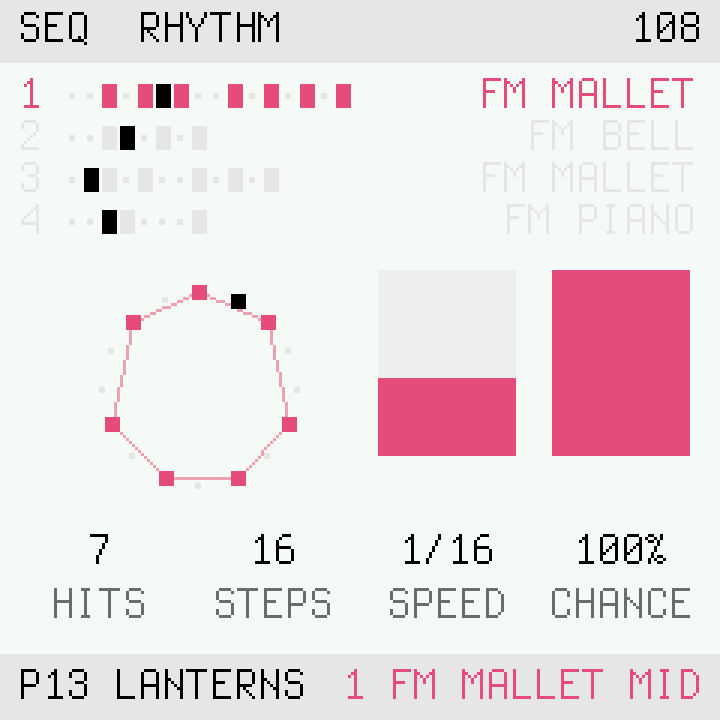
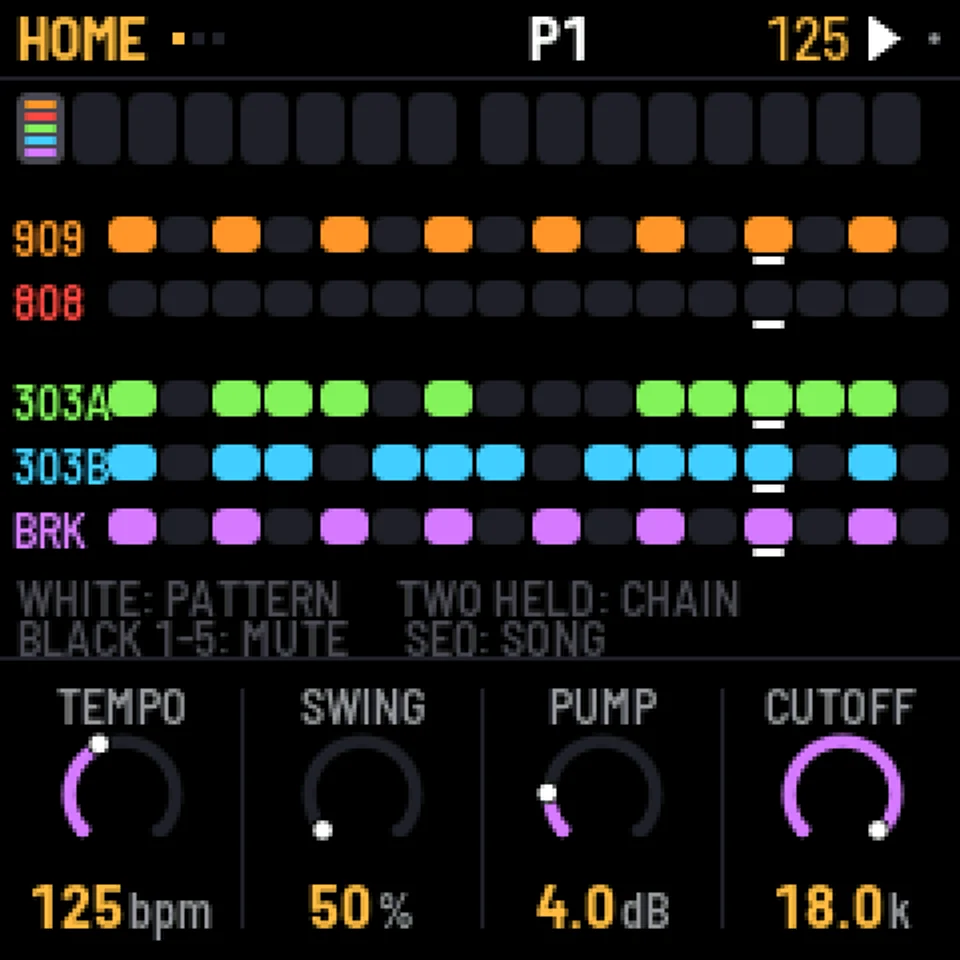
The FM-1's RHYTHM page: a bar of sixteen steps drawn as a circle, its seven hits joined

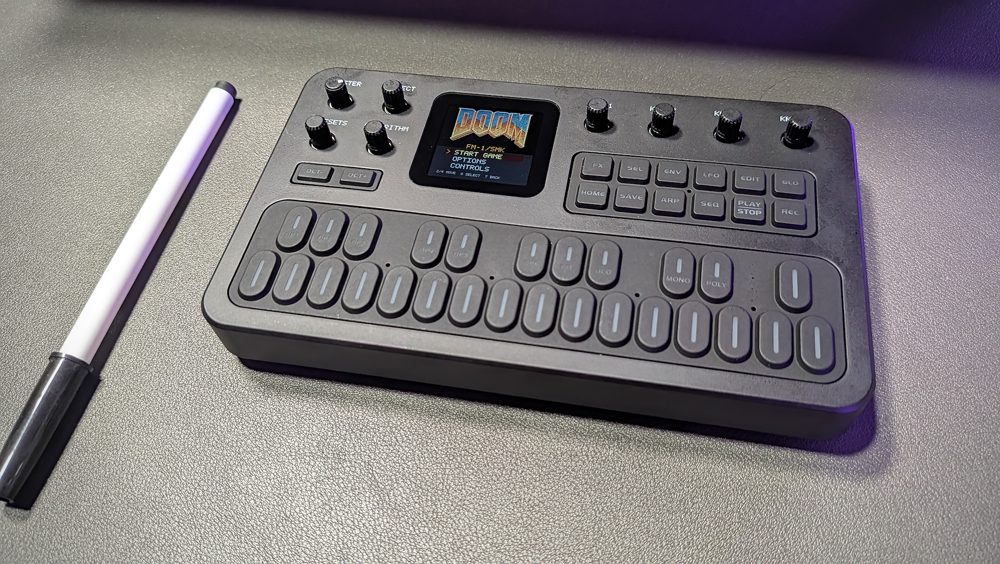
The FM-1

M-VAVE · $60 · JieLi AC7911B · 213 firmwares listed on 1 November
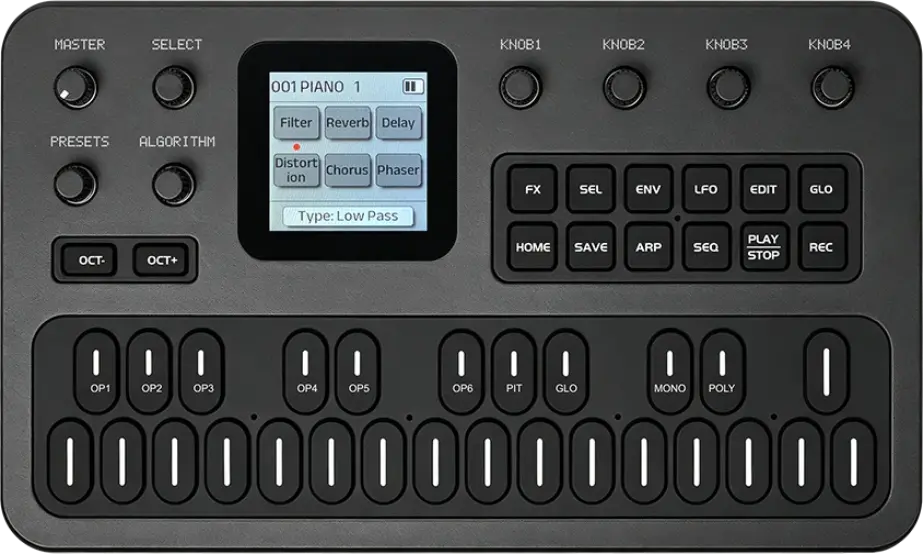
The M-VAVE FM-1: a black pocket keyboard with 27 keys, seven knobs and a small square screen The FM-1 running Doom, a pen beside it for scale

photos: M-VAVE; Nick Indge, Ars Technica
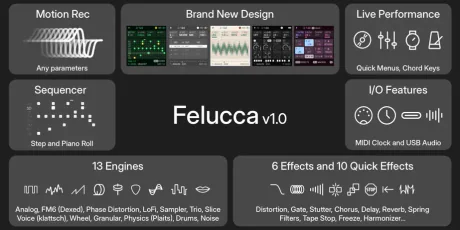
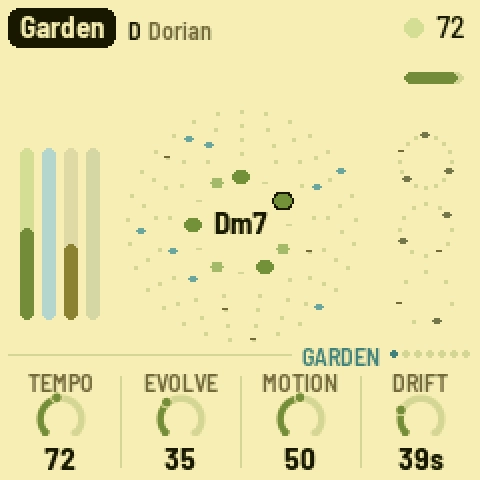
Felucca
SLOOP
Melodee
X0X
AMB-1
FM1 Quest
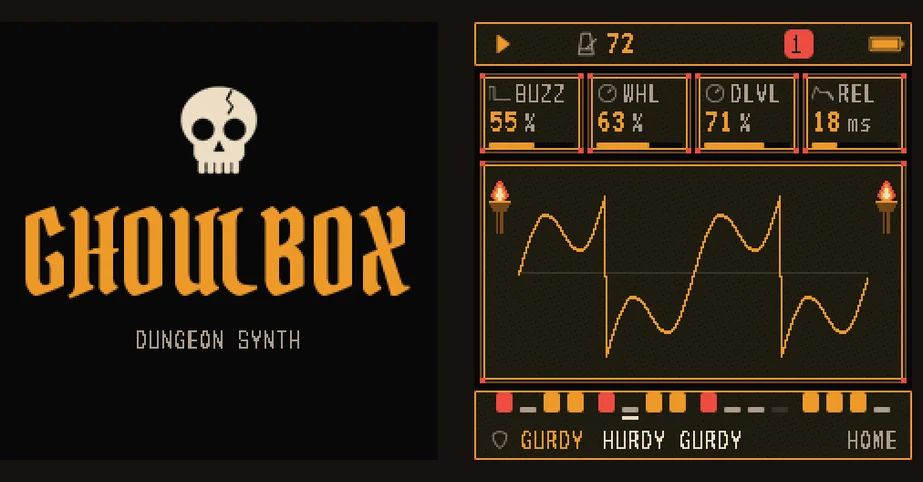
GHOULBOX
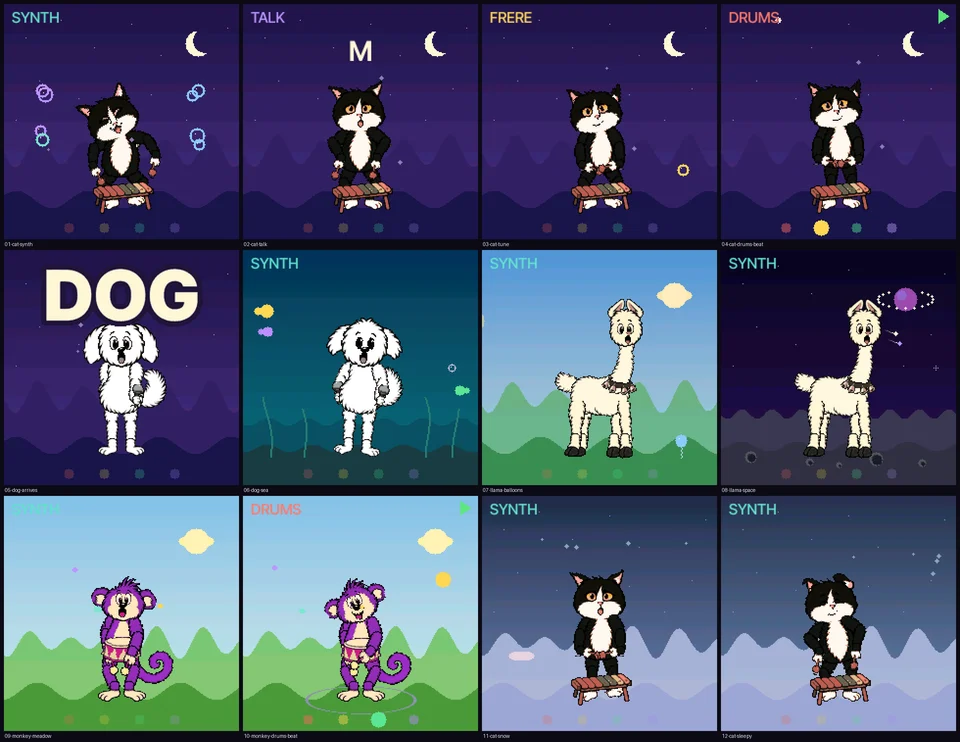
PurpleMonkey
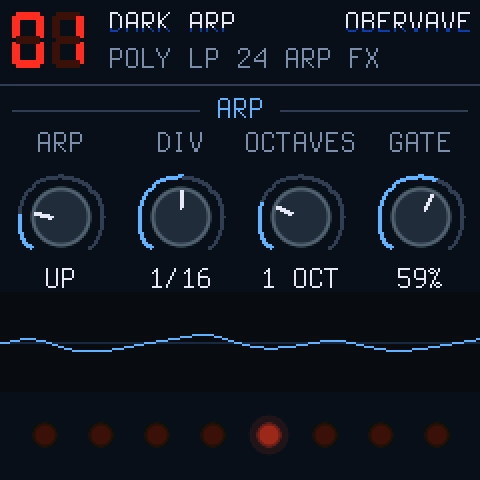
OberVave
Rainbow mode
Fart Machine One · "eleven artisanal farts on the keys, a reverb, a delay, and a 16-step sequencer"

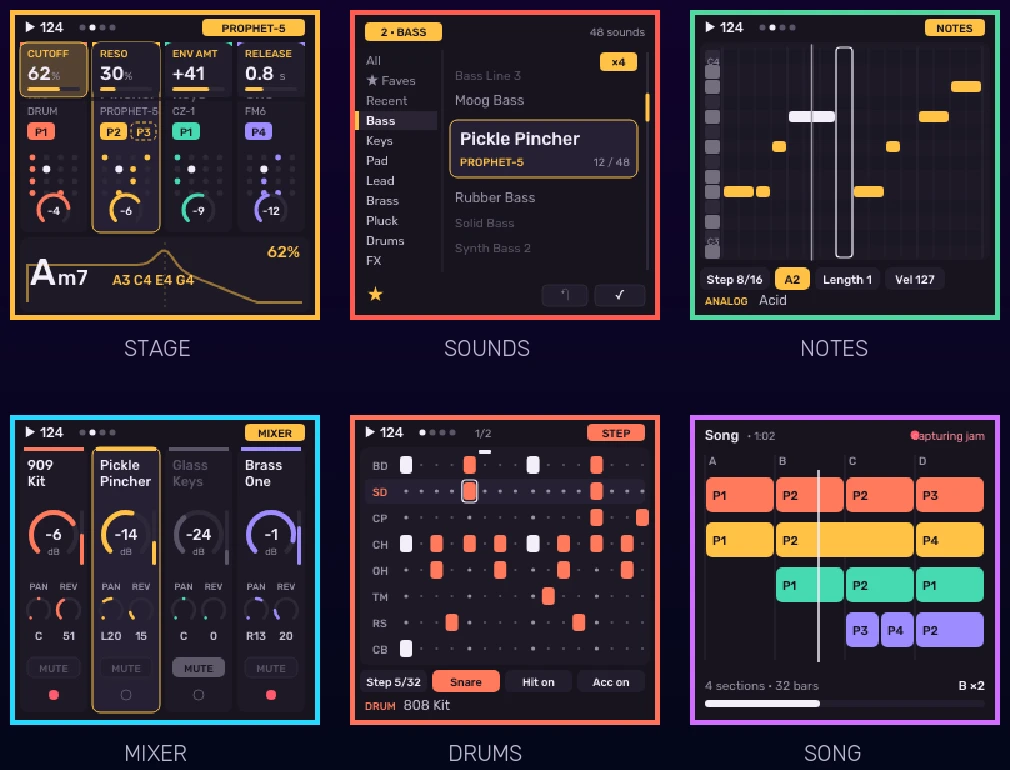
"We're not even through October, and there are already more community firmware projects available to install on the FM-1 than I could ever hope to cover. And just in case you were wondering: yes, it plays Doom."

Ars Technica, 26 October 2026

the chip they all run on

  • JieLi AC7911B: integer core, no floating point, 1 MiB of flash run in place.
  • No debug header, no recovery button.

The others were written in weeks, in C, with an AI, for a chip with no debugger. So was this one, in Lean. 315 theorems about that Lean go through the kernel on every build.

The instrument

a generative sequencer, and why prove one

A generative sequencer with a modular synth's oscillator in a $60 keyboard, with 315 theorems about the promises it makes.
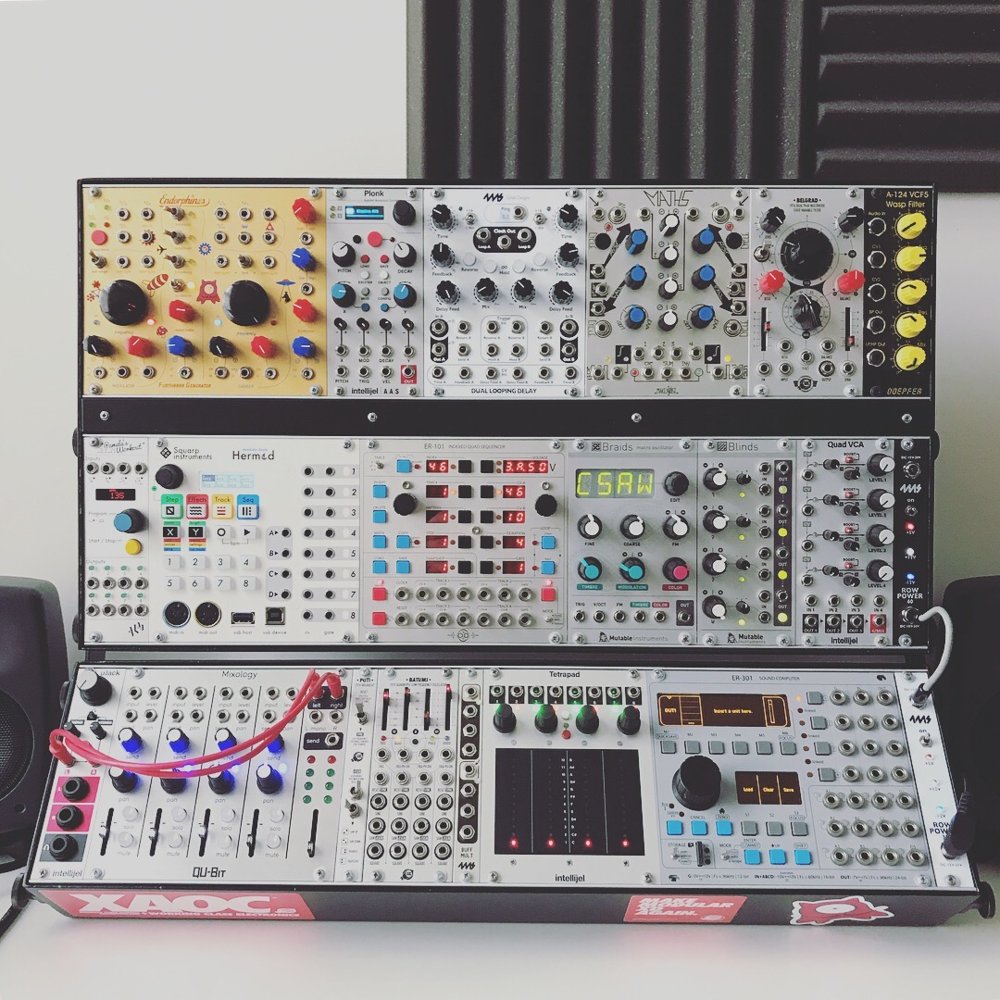
A Eurorack modular synthesizer; in its middle row a Mutable Instruments Braids with CSAW on its display

a Eurorack case; middle row, a Mutable Instruments Braids reading CSAW, the oscillator this firmware compiles from source. Photo Paul Anthony, CC BY-SA 4.0

what it is

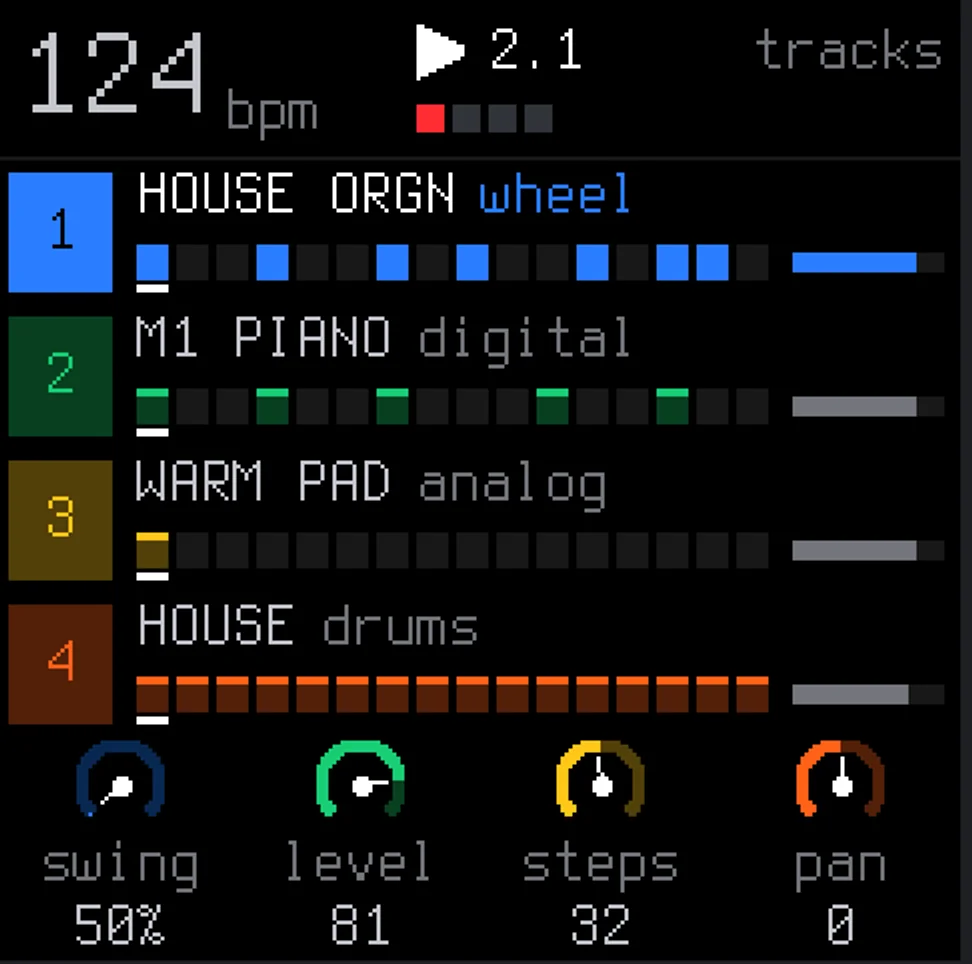
  • Four lanes, each a rhythm (Euclidean by default) choosing its own notes.
  • Nothing written down: the rules are the song.
  • Braids (Mutable Instruments), an FM voice and an 808 kit, in Lean.
  • All integers: the chip has no floating point.

why prove any of this

  • Promises you can hear: in key, on the beat, nothing stuck.
  • A test plays some settings; a theorem holds at all of them.
  • Fixed-point bugs are silent until they are noise or a crash.
  • No debugger on the chip: prove it before flashing.
  • The rhythm is a Christoffel word; the chord walks are a group.

What it does

four lanes · Braids, FM, an 808 kit, a filter · two sends · the PUNCH page · seven looks
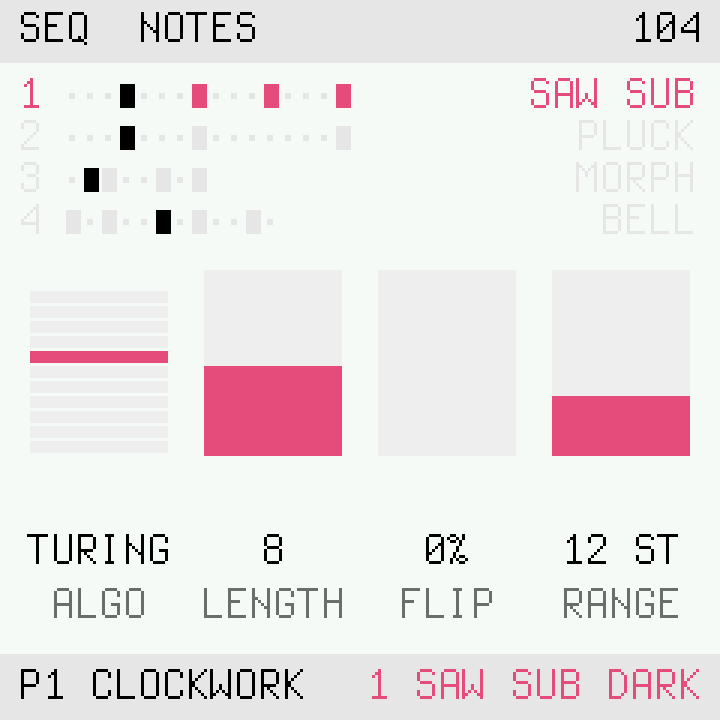
SEQ > NOTES: the Turing note source, its length, flip chance and range

the sequencer

  • Four lanes: hits, steps, speed, chance; the bar drawn as a circle.
  • FEEL: Euclid, rotated with accents, a cellular automaton, ratchets.
  • NOTES: random, walk, up, down, bounce, loop, Turing, step, Markov, grammar, chord.
  • HARMONY: key, scale lock, progressions as degrees, Tonnetz walks. Swing, MIDI in and out, external clock, arpeggiator, quantized keys.
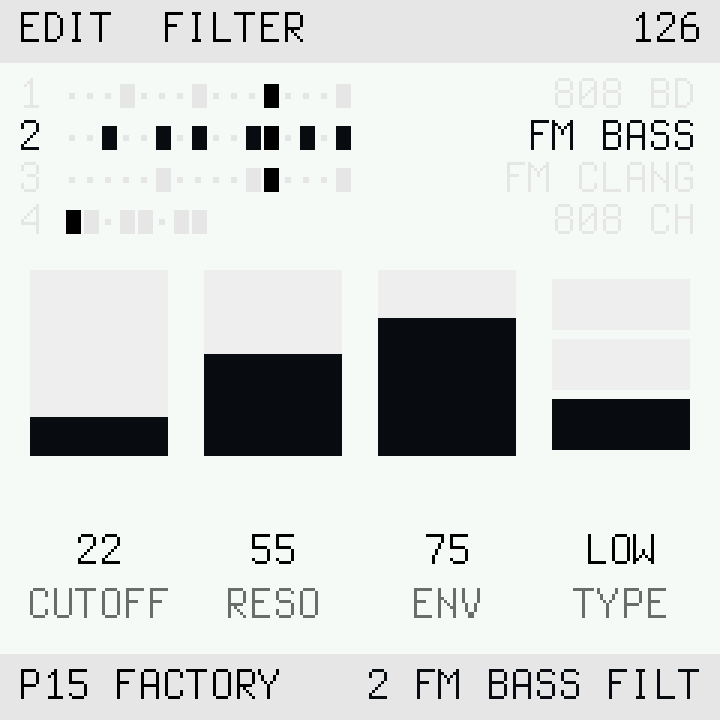
EDIT > FILTER: cutoff, resonance, envelope amount and type of the chosen lane's sound

the engines

  • Braids, all 48 shapes: analog, filter, voice, FM, physical, percussion, wavetable, noise.
  • Four-operator FM voice in Lean: piano, bell, bass, brass, glass, mallet, organ, clang.
  • 808 kit in Lean: kick, snare, clap, hats, toms, cowbell, cymbal.
  • Per-voice filter (low, band or high), opened by the envelope; in Lean, states proved in range.
  • Browser by engine or by type; per lane an envelope, an LFO, pan and level.
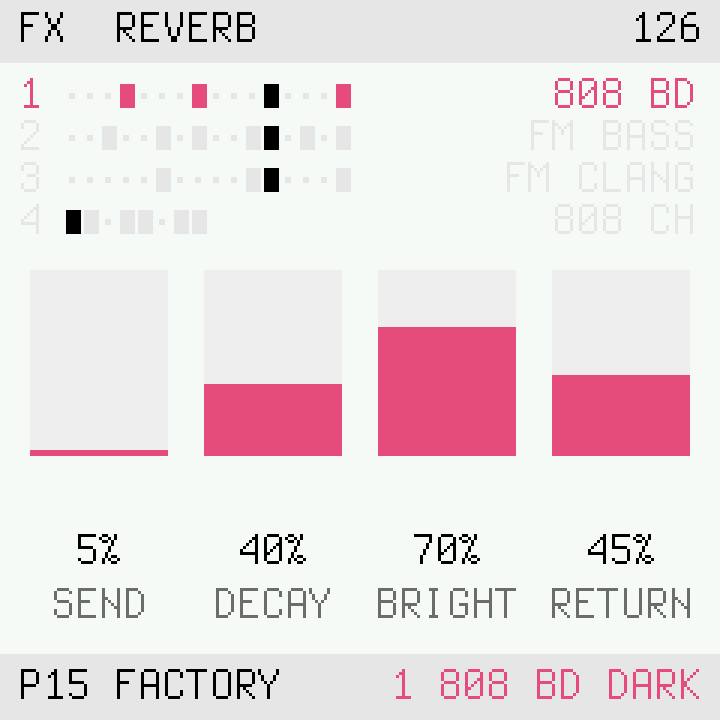
FX > REVERB: send, decay, bright and return

the effects

  • Clouds' reverb on a send: decay, brightness, return. Its tail is proved to die away.
  • Ping-pong delay on the same send: a note value at the song's tempo, feedback, tone.
  • Each lane sets its own send: one lane dry, another wet.
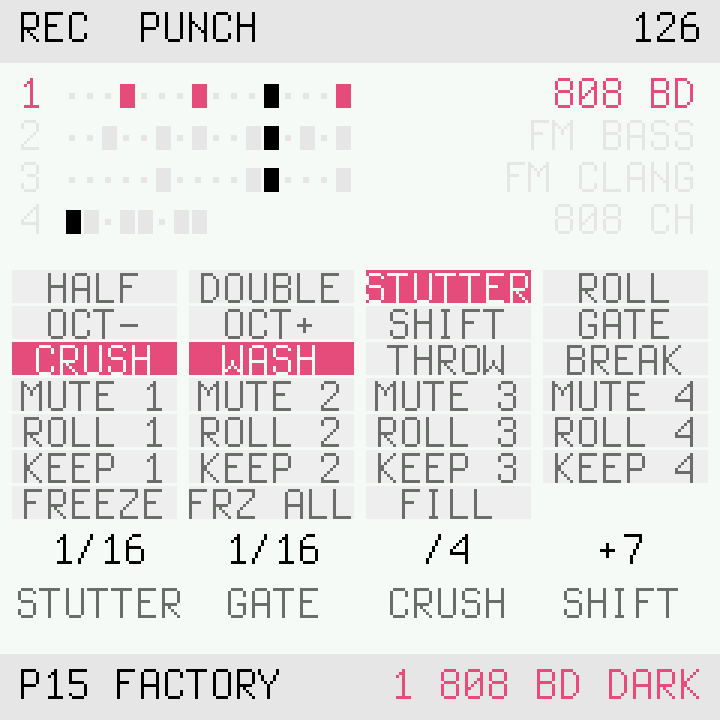
REC > PUNCH: the keys as effects, CRUSH, STUTTER and WASH lit

punch-in effects

  • REC makes the keys momentary effects on the whole mix, like the OP-XY's punch-in FX.
  • HALF and DOUBLE time, STUTTER, ROLL, octaves, SHIFT, GATE, CRUSH, WASH, THROW, BREAK, four mutes, four rolls.
  • Let go and it is gone: with no key held every effect is the identity, a theorem; the gate fades out in 1.5 ms.

Lean on the chip

Firmware/ → C → the FM-1 and the browser; Proofs/ about the Firmware

Proofs/*.lean315 theorems Firmware/*.leanwhat the chip runs Clean -c the FM-1JieLi clang → pi32v2 the browserclang → wasm, the same C kernel + five checkerslake comparator, three axioms about the same values? asserted while it runs
CheckWhat it establishes
Proved315 theorems about the Lean the chip runs: sequencer, FM voice, 808, range and no-wrap facts about every Braids engine, reverb, delay, mix, patch format. Three standard axioms, nothing else.
The compiler, tested354 exported functions compiled to C and run on random inputs; the kernel checks each value against the definition. 2124 values a run.
The proofs, watchedTwelve theorem statements asserted on the running firmware where the C takes the Lean's answer. Tens of millions of checks over the test run; the count and the failures (zero) are printed by make test.

trusted, listed in the README

  • What is left of Braids' C++, the per-block setup; the sample arithmetic is Lean, checked sample for sample against the original.
  • The C loops that call the Lean; the screen, the drivers, Dinghy's update path.
  • Lean's C backend, JieLi's clang, the 14 KB of C runtime, and the 39 accessors that read Braids' tables.

What is proved

315 theorems, in five kinds

KindTheoremsFor exampleWhat it is good for
The music it plays84run_every_note_on_has_a_note_off
run_clock_never_drifts
run_bar_plays_every_hit
  • Every note the lanes and the arpeggiator start gets its note-off, over a whole performance.
  • A lane's step is a function of the tick count: notes cannot make lanes drift apart.
  • At chance 100 a bar plays exactly the hits on the screen; never a rest.
  • With QUANT on, the keyboard cannot leave the scale or the chord.
Music theory22euclid_is_christoffel
tonnetz_group_is_dihedral
harmony_hexachord_theorem
  • The rhythm is a Christoffel word: maximally even.
  • The chord walks are the PLR group of order 24: they come home.
  • A six-note set and its complement share their intervals (Babbitt): why BLACK KEYS sounds as it does.
Sound, in fixed point175fm_sine_bounded
drum_output_never_wraps
filter_states_stay_bounded
  • A proved sample is clipped, not wrapped (four places where Braids itself overflows are matched, not proved: LEAN-ENGINES.md).
  • No oscillator runs past Nyquist.
  • Every table index the Lean computes stays inside its table (two of Braids' own overruns are kept and listed).
  • With no floating point, these bugs are noise or a crash screen.
The mix and the effects28mix_bus_never_wraps
reverb_tail_dies_away
delay_echoes_die_away
  • Six voices and two sends fit the mix without wrapping.
  • With nothing fed in, reverb tail and echo die away at every knob setting: no howl.
Patches6patch_decode_encode_round_trip
patch_decode_only_fits
presets_all_fit
  • A saved patch loads back as saved.
  • A foreign or corrupt flash slot is rejected whole, never read as settings.
  • Every factory patch is in range of the tables it indexes.

The song

four presets playing at once, 78 seconds (P) · mpancia.github.io/fmfm · make install && make run

the film

formalfred.webm

P plays · R from the start